How ultra-prime residences are evolving from lifestyle assets into strategic platforms.
For decades, the world’s finest residences were valued primarily for beauty, privacy, legacy and permanence. Today, a more sophisticated model is emerging, one in which ultra-prime homes are also becoming strategic platforms for curated private hospitality and selective yield.
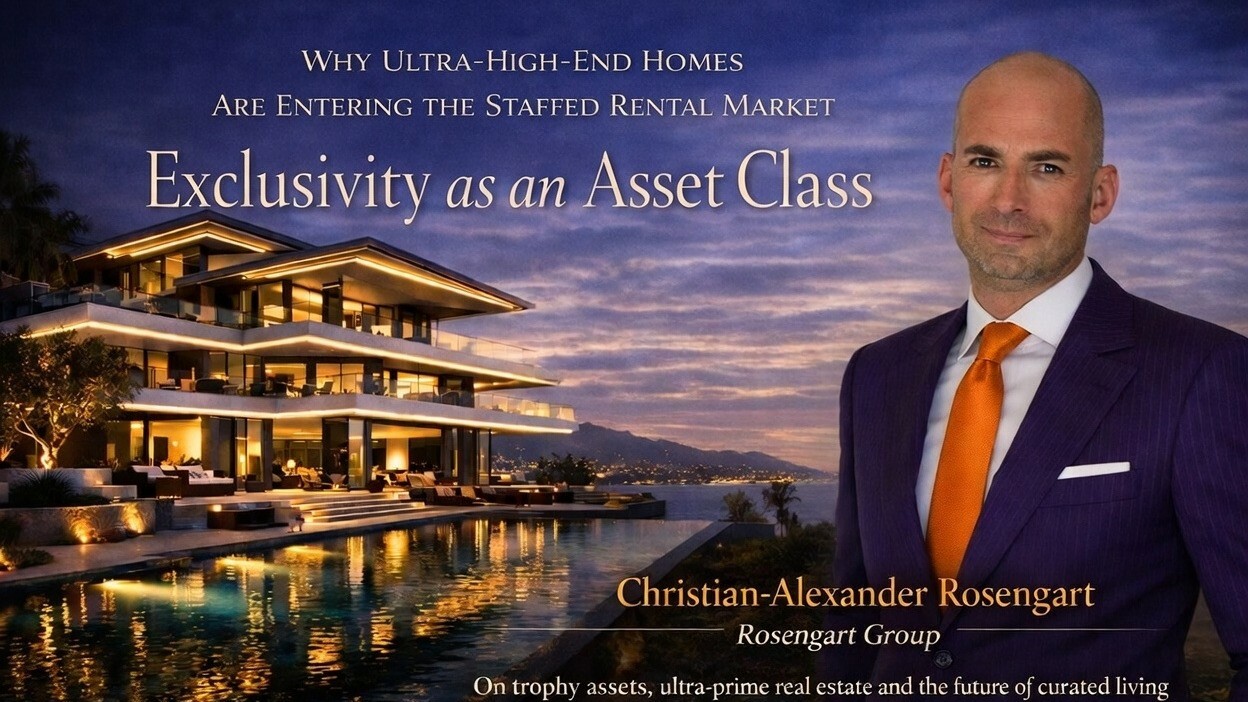
Exclusivity as an Asset Class
Why Ultra-High-End Homes Are Entering the Staffed Rental Market
There was a time when the world’s finest residences existed outside the logic of performance.
A villa above the Mediterranean. A chalet in the Alps. A Mayfair townhouse behind a discreet façade. A waterfront estate in Dubai. A private palazzo in Italy.
These were never simply homes. They were sanctuaries of beauty, privacy and permanence. They preserved capital, certainly, but they also held something even rarer: emotion, identity, memory and legacy.
For decades, that was enough.
Today, it still matters profoundly. But it is no longer the full story.
A quiet transformation is underway across the uppermost tier of the global real estate market. Increasingly, ultra-high-end homes are no longer viewed solely as lifestyle assets or passive stores of value. They are being reassessed as strategic holdings within broader portfolios, capable of preserving prestige and privacy while also generating selective, highly controlled yield.
This is not the mass-market rentalisation of luxury housing. It is something far more refined.
It is the emergence of a new category in which exclusivity itself becomes an asset class.
From Trophy Asset to Strategic Platform
For generations, the ownership of an exceptional residence was an end point in itself. It signified success, stability and arrival. A great house did not need to justify itself through utilization. Its existence was its own justification.
But the architecture of wealth has evolved.
Today’s ultra-high-net-worth individuals and family offices are more global, more mobile and more disciplined in the way they think about asset allocation. Secondary and tertiary residences are increasingly examined not only through the lens of prestige and long-term appreciation, but also in terms of operational relevance, carrying cost, flexibility and strategic coherence within a broader ecosystem of holdings.
This does not diminish the emotional value of a remarkable home. In my view, it does the opposite. It places that home within a more intelligent framework.
The world’s rarest residences should not be treated as ordinary assets. But neither should they remain conceptually frozen in an earlier era of ownership. The finest homes today must be understood in full: as lifestyle assets, legacy assets, brand assets and, when structured correctly, performance assets.
The question is no longer whether a residence is exceptional.
The question is whether it is positioned with the intelligence its rarity deserves
Why This Shift Is Happening Now
Several structural changes are driving this movement.
The first is economic reality. At the ultra-prime level, the cost of ownership has risen meaningfully. Staffing, security, insurance, maintenance, utilities, compliance, technology and specialist oversight have all become more sophisticated and more expensive. A world-class residence is no longer simply maintained; it is operated.
The second is the transformation of luxury travel itself. The most discerning guests increasingly seek something that even the finest hotels struggle to deliver fully: privacy without compromise, personalised service without standardisation, and the freedom of a true residence supported by seamless hospitality.
The third is cultural. Wealth today is fluid. Families, founders, principals and advisors move between Monaco, Dubai, London, Riyadh, Paris, New York, Milan, Geneva and the Riviera with extraordinary regularity. Their expectations have evolved accordingly. They want homes that allow them to arrive effortlessly, live beautifully, remain discreet, and experience a destination with intimacy rather than through the filter of a traditional hotel environment.
That is precisely where the staffed private residence has become so compelling.
The Rise of the Staffed Private Residence
A new form of luxury hospitality is emerging, one that sits between private home ownership and elite hotel service, while in many cases surpassing both.
This is not about public listing platforms or transactional short-term rental culture. It is about fully staffed, professionally managed, ultra-prime residences that are offered selectively, discreetly and only to the right clientele.
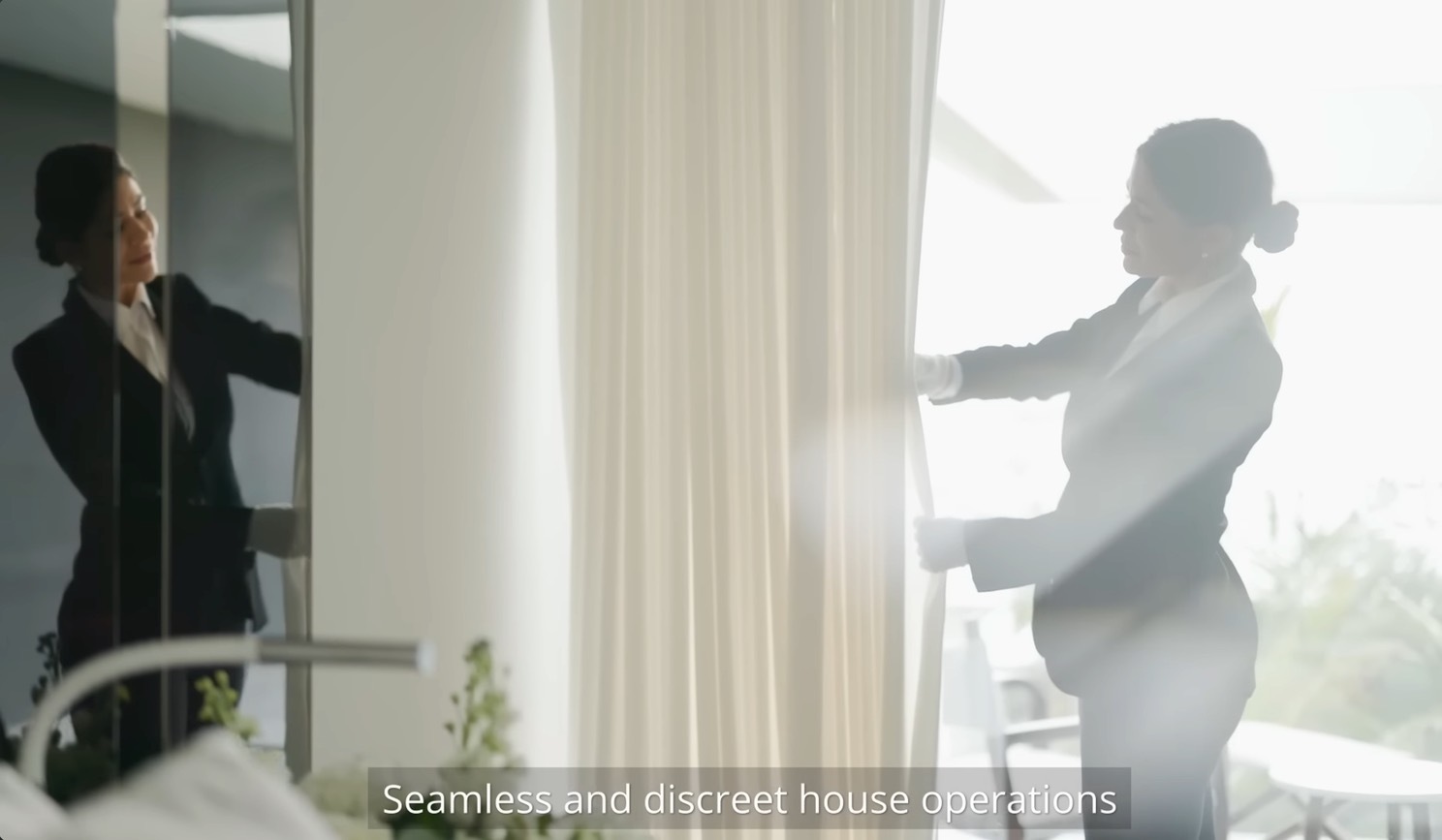
That distinction is fundamental
At this level, the property must offer more than architectural beauty or exceptional location. It must be operationally flawless. It must function with the grace of a five-star hospitality environment, while preserving the intimacy, individuality and emotional resonance of a true home.
That means highly trained service teams, structured protocols, rigorous maintenance, privacy procedures, guest readiness, security integration and exceptional attention to detail. It may involve butlers, chefs, chauffeurs, house managers, wellness specialists or security staff. But more importantly, it requires invisible coordination.
And that, in truth, is where real luxury begins: not only in what is seen, but in what is perfectly orchestrated behind the scenes.
Exclusivity Is No Longer Just a Matter of Price
Exclusivity is one of the most overused words in the luxury world, yet one of the least understood.
True exclusivity is not merely about cost. Nor is it simply about rarity. At the highest level, exclusivity is the convergence of access, control, trust and identity.
Access, because the most desirable properties are rarely circulated widely. They move through private networks: family offices, trusted advisors, specialist operators, discreet conciergeries and long-established circles of relationship capital.
Control, because not every guest is appropriate for every residence. At this level, vetting is not administrative. It is essential. The integrity of the asset depends on who enters it, under what conditions, and with what level of oversight.
Trust, because one weak point, whether operational, reputational, digital or human, can undo years of curation.
And identity, because the rarest homes possess something deeply intangible: atmosphere, provenance, a sense of place, and an emotional charge that cannot be manufactured easily. In an era when luxury has become visually abundant, authenticity and soul have become even more precious.
This is why the finest properties are not entering the rental market as ordinary rentals.
They are entering it as curated environments of private hospitality.
Yield Without Dilution
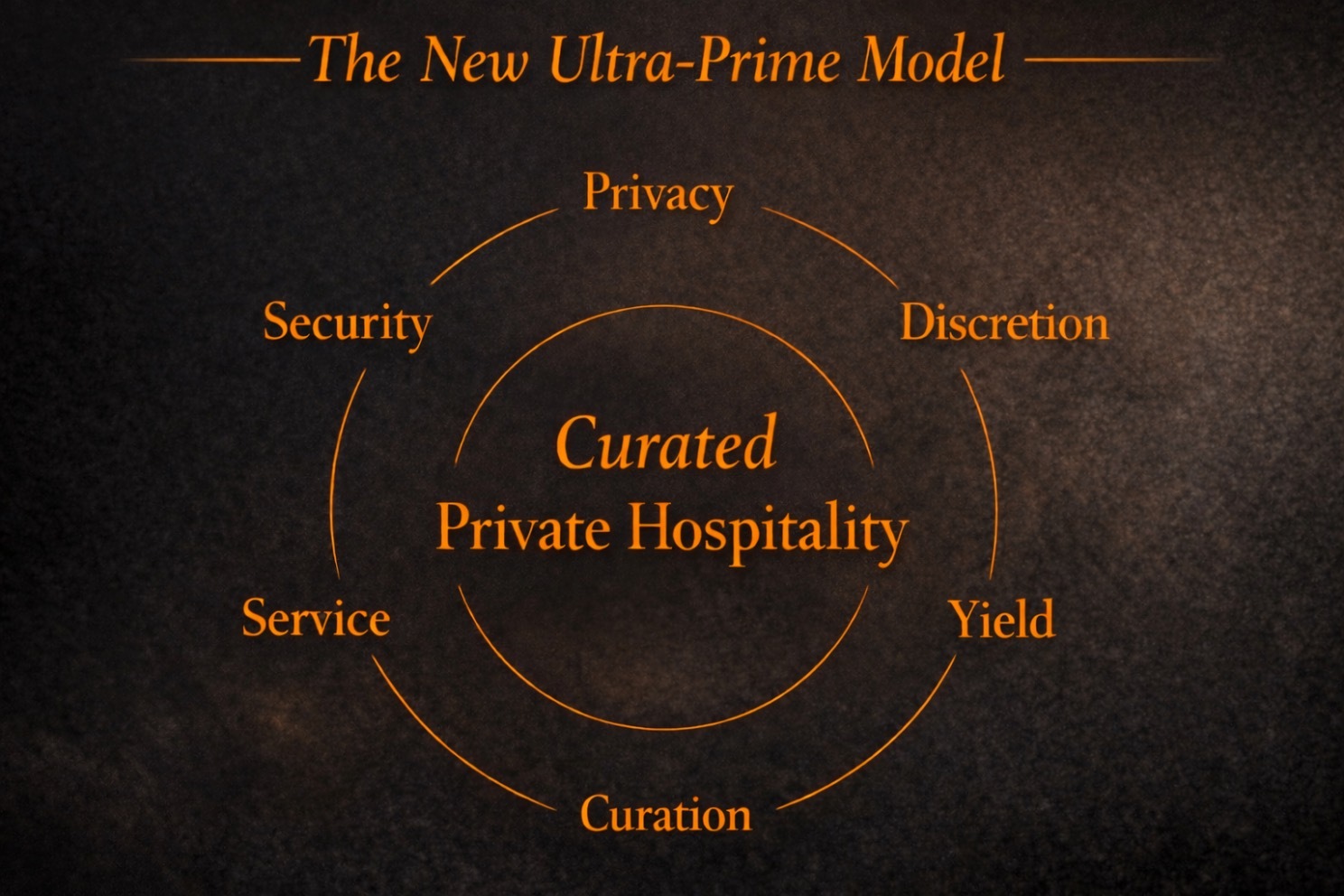
When structured correctly, selective letting can transform an ultra-prime residence into a yield-enhancing component of a broader wealth strategy.
But it must be said clearly: this is not a volume business.
At the highest end of the market, value is not created through frequency. It is created through selectivity. Fewer stays, longer stays, higher-quality guests, carefully calibrated pricing, minimum-stay discipline and rigorous operational control create a model that protects the property while unlocking financial relevance.
This is where many misunderstand the opportunity. The goal is not to commercialize a remarkable home in a way that diminishes it. The goal is to activate underutilized time while preserving, and in some cases even strengthening, the property’s prestige, desirability and long-term value.
That is the difference between monetization and stewardship.
One extracts. The other elevates.
The Hidden Layer: Operational Excellence
The appeal of this market is obvious. The difficulty lies in execution.
Very few homes are truly prepared for this category.
A residence may be architecturally magnificent and still be entirely unready to receive ultra-high-net-worth guests at the standard they expect. What defines success here is not only design, but systems: arrival experience, staffing calibration, housekeeping rhythm, technology reliability, culinary agility, local knowledge, privacy management, security presence and the invisible confidence with which every detail is delivered.
In this world, excellence is not decorative. It is infrastructural.
This is why the operating framework matters so deeply. Without it, the risks are immediate: reputational dilution, service inconsistency, guest mismatch, security exposure and erosion of asset integrity. With it, the opportunity becomes extraordinary.
The residence remains private in spirit, but performs with precision.
That is the new frontier.
Voir les identifiants de contenu
A More Sophisticated Future for Great Homes
I believe we are entering a new era in which the world’s most exceptional residences will be defined not only by how they look, or where they are located, but by how intelligently they are positioned.
They will remain emotional assets. They will remain legacy assets. They will remain symbols of distinction.
But increasingly, they will also become strategic platforms, capable of preserving aura while participating selectively in a highly curated ecosystem of private hospitality and wealth intelligence.
This is not a departure from luxury.
It is a refinement of luxury.
In the years ahead, the most successful owners will likely be those who understand that structure does not diminish exclusivity. Done correctly, structure protects it. Stewardship enhances it. Operational excellence dignifies it.
And in that sense, exclusivity is no longer simply a characteristic of a great property.
It becomes part of its economic power.
Closing Reflection
The finest homes in the world were never meant to be ordinary. They were created to embody vision, beauty, privacy and permanence.
That has not changed.
What has changed is the sophistication with which these homes can now be managed, positioned and protected. When approached intelligently, the ultra-prime residence is no longer only a place to own or admire. It becomes a living asset, one capable of delivering experience, discretion, emotional value and carefully structured performance in equal measure.
For those who understand the difference, the future of luxury real estate will not be defined by exposure.
It will be defined by curation.
Official Film Skyblade Cannes Californie - France
Christian-Alexander Rosengart - Rosengart Group On trophy assets, ultra-prime real estate and the future of curated living.